

+55 (21) 99619-8558

Care for your health. Anticipate risks. Preserve the future.

Preventive medicine to preserve health, autonomy and longevity.

A porcelain heart with a seedling at its center and six porcelain and glass objects linked to it by bronze threads: a pear with a bowl, a no sign over a cigarette, three joined figures, stacked stones, a kettlebell with a dumbbell, and a crescent moon over a pillow.

3D Atlas

See the body from the inside

Log what you eat on an ordinary day. The body shows where each nutrient acts, and what may be missing.

  1. YouSex, age, weight, height and activity: the reference for your day.
  2. Your dayMeal by meal, with foods from the Brazilian TACO table.
  3. ReportWhat fell below or above, and which organ each nutrient acts on.

Educational resource · the 3D is heavy and only downloads when you open it · on mobile, prefer Wi-Fi

3D Atlas · educational resource

Loading the atlas…

How it works

Care, step by step

From booking to follow-up. Treatment at Serfaty Clínicas is ongoing: a consultation is the beginning, not the end.

  1. Booking

    By WhatsApp or phone.

    Message us on WhatsApp
  2. Consultation and medical assessment

    History, physical examination and a review of your medications.

  3. Further tests

    A panel chosen case by case, explained at the follow-up visit.

  4. Long-term medical follow-up

    Agreed return visits, with treatment adjusted along the way.

Tool

What is your cardiovascular risk over the next ten years?

The PREVENT equations, from the American Heart Association, using the test results you already have. The result appears right away and nothing leaves your browser.

Open the calculator page
  • Heart attack and strokein 10 years
  • Heart failurein 10 years
  • Cardiovascular eventin 10 and 30 years

Cardiovascular risk calculator

Cardiovascular risk

How much risk you carry today

The PREVENT equations, from the American Heart Association, estimate the chance of a heart attack, stroke or heart failure over 10 and 30 years. The result appears on its own, and nothing leaves your browser.

How the calculation works and what it cannot see
About you
Biological sex
years
From 30 to 79. The 30-year horizon goes up to age 59.
What your tests show
mmHg
The top number.
mg/dL
mg/dL
eGFR
It comes already calculated with the creatinine test, labeled “estimated GFR” or “eGFR”. It is the only value you cannot know without the lab report, and it is what PREVENT added to the older scores.
Weight and height
kg
cm
BMI

24.2

Calculated. Used only in the heart failure equations.
Conditions and medications
Optional tests

They make the estimate more personal when available. Without them, the calculation uses only the tests above.

UACR
The urine albumin-to-creatinine ratio (UACR) is clinically indicated for individuals with chronic kidney disease, diabetes or hypertension.
HbA1c
HbA1c testing is clinically indicated for individuals with diabetes, prediabetes, overweight or obesity, or a history of gestational diabetes.

Estimated risk · 10 years

-%

risk of total cardiovascular disease: heart attack, stroke or heart failure

Heart attack and stroke (ASCVD) · 10 years--

Risk categories from the 2026 ACC/AHA dyslipidemia guideline.

Heart failure · 10 years
-
Total cardiovascular disease · 30 years
-
Heart attack and stroke (ASCVD) · 30 years
-
Heart failure · 30 years
-

It describes what happens, on average, to people with a similar profile. It is not a diagnosis and does not predict your case. High risk is not disease; low risk is not a clean bill of health.

Day to day

The six pillars behind the results

Treatment sets the course and adjusts it; the results depend on what happens between one consultation and the next. These six habits are assessed and discussed at every return visit.
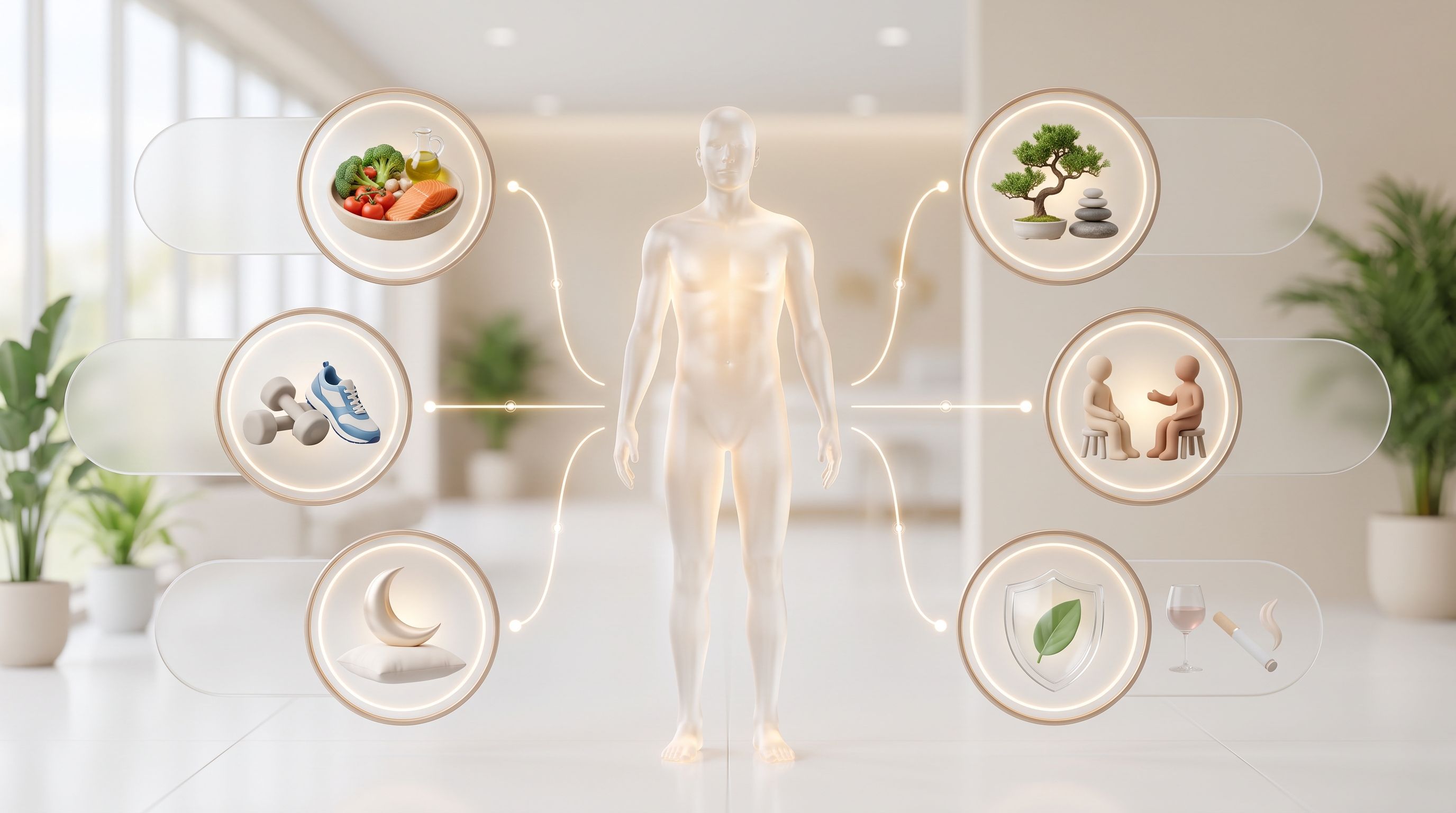
  1. Nutrition

    A balanced eating plan, built with you and possible to keep up day to day.

  2. Movement

    Aerobic activity and strength training. Strength and lean mass are measured at each stage of the program.

  3. Sleep

    How long and how well you rest. It is one of the eight areas assessed in the consultation.

  4. Stress

    Managing ongoing stress, which affects hormones, sleep and weight. Strategies are agreed on case by case.

  5. Social life

    Family, friends, community. Isolation is a health risk factor and is assessed like any other.

  6. Exposures

    Alcohol, tobacco and everyday exposures. Reducing what is within reach, with guidance and without excessive vigilance.

Clinics

Leblon and Barra da Tijuca

Two clinics, the same care, by appointment, Monday to Friday.

The map only loads when you ask for it.

Leblon

R. Carlos Góis, 375 · suite 604
Leblon Medical Center
Leblon · Rio de Janeiro/RJ · CEP 22440-040

Monday to Thursday: 8:30 am to 10 pm · Friday: 8:30 am to 5 pm · Saturday and Sunday: Closed

The map only loads when you ask for it.

Barra da Tijuca

Av. das Américas, 4801 · suite 306
Barra da Tijuca · Rio de Janeiro/RJ · CEP 22631-004

Monday to Thursday: 8:30 am to 10 pm · Friday: 8:30 am to 5 pm · Saturday and Sunday: Closed

Message us on WhatsApp